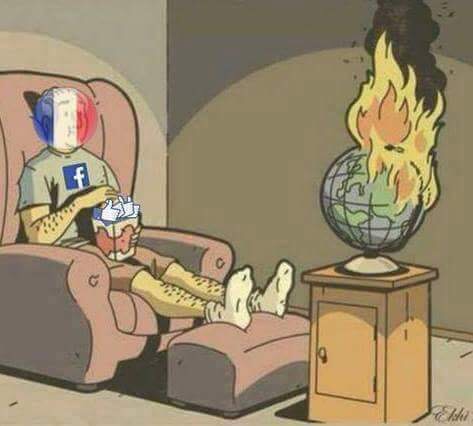
When lab mice are first used for experiments they all do the exact same thing…
The mice are put in their little glass cages and then immediately begin checking the surroundings.
They search the entire cell for exits, feverishly scanning every inch of the cage only to come to the realization that they’re going to be there for a while.
And they become benign.
Every once in a while they might do another parameter check but, for the most part, they just do nothing.
The key here is that the mice know they are in captivity. They don’t act how they normally would in the wild and accept their patterned lifestyle. They contradict their instincts.
No matter what kind of critter that’s put in a glass cage – snake, gerbil, insect, etc. – it goes through this same routine. It realizes it’s trapped, periodically checks for exits and ultimately settles into its confined space.
Now, if these same animals were instead placed in, let’s say, a 1000 acre fenced-in nature preserve then they would act differently…
This larger environment is much harder for the little mouse (or even a cow or deer for that matter) to get its arms around, the boundary doesn’t really matter to them. When coming upon a fence in a nature preserve, animals maybe stare at it for a little while or poke around a bit, but ultimately go back to whatever it was they were doing.
They won’t try to escape. And they certainly won’t test every inch of it like they would in the smaller cage.
This is because the fence is only a minor detail in the vast expanse that is their home.
To humans, this doesn’t make a lot of sense…
We would see both the glass prison cell and the 1000 acre preserve as cages.
A human, upon realizing it is living in a fenced-in environment like that, would become bothered by the barrier. They’d want to know what was on the other side. Who put it there? Why?
They would obsess over it.
The very existence of the fence suddenly makes their old environment (that once seemed like more than enough) feel a lot smaller.
But what if the enclosure was big enough? Would the fact that there was a fence even matter?
Would we become benign?
In the Heart of the City (of Love)
When visiting Paris it’s easy to notice some things right away:
First, the architecture is beautiful and the food is outstanding (and it’s kind of dirty… Plus hard to get around, but that’s just me).
It’s also easy to pick up on the very real energy of love that’s in Paris.
I don’t know what it is, but I’ve been there three times and it’s like the place has a common heartbeat. Maybe it’s the dramatic intensity of the Baroque architecture. Or the gentle, winding Seine. Or possibly even a collective placebo effect of so many people expecting to feel love in Paris.
Whatever the reason, romantic feelings are pumped into all who walk the streets of the City of Love.
Perhaps this is why America (and the rest of the West) took the recent terrorist attacks in Paris so personally. Or why we saw so many Facebook profile pictures become filtered with a French flag…
Because by attacking Paris, people felt that the terrorists were symbolically attacking love itself.
Think about it… Our anger couldn’t have been because it was violence against innocent civilians. On Thursday the 12th there was a near identical attack on innocent people in Beirut. We hardly even batted an eye at that.
We weren’t showing solidarity with Paris because of the casualty numbers either. In Paris around 130 people were killed and another 300 were injured, while over 2000 were killed and many more injured in the Boko Harem attacks in Nigeria only 10 months before. How many Americans put a green and white flag filter on their Facebook profile pictures after that? I’d venture to guess it’s somewhere near zero.
Some even lazily point to Western bigotry or racism. They say it’s because the French look like stereotypical Americans so we mourn them more. There are many faults in this logic, though. For starters I’ve seen white, black, Hispanic, and every other type of American put the bleu, blanc et rouge over their faces. At the same time, Denmark, Ukraine, Israel and a couple of other countries with people that “look” American have all been attacked this year. We didn’t see anything close to the reaction for them as we did for the Parisians.
No, we are seeing this “save Paris” campaign because the attacks represent an assault on love itself…
And in today’s West, love is a fierce competition.
Love is a Battlefield
People sometimes throw around a phrase about how there is only one word for love in English but (insert language) has several.
It’s always used as a jab at English speakers, too. That we democratize love or don’t have the same depth of love understanding as speakers of languages who have many words for it.
The democratization of love part is probably accurate, because we do “love” lattes and football teams. I’m sure if I turned on Soulless Housewives of Wherever, I would see plenty of people that could tell you everything about when they got their red bottomed shoes but blank on the name of their child’s science teacher.
However, I don’t necessarily buy the depth of love critique…
Having one word for love actually shows a deeper understanding of the emotion. English speakers expand and segment love into different partitions – each of which can be ubiquitously understood by other speakers. When someone says, “I love that team!” we don’t hear the word “love” the same way that we would when that person is talking about their first born. We know what love partition a speaker is communicating to us in. We don’t need separate words for family and sports love.
Marketers have capitalized on this duality. The strongest forms of “love” – for family, friends, freedom, whatever – are all used to sell diamond rings, anti-depression medication and even a cold beer on Corona beach. Emotionally charged movies and tv programs show us what romantic love is supposed to look like. We even invented Valentine’s Day with specific rules and expectations about love that should be followed.
This has turned our consciousness into a total mess. Since love is understood at many levels but also democratized (and ultimately capitalized on), the lines that are supposed to separate the “love” segments in our minds have become blurred.
Internally, we are struggling to keep the barriers separated so we strive for certain types of love that are predefined for us. We see fairy-tale-like happiness in movies and think, “there… that’s love” and our minds blend love into this awkward jumble of mixed emotions.
We simply have no idea what we love, so we just love everything…
And this has led to a competition over love itself. It’s more important to show others that we have the ability to love or be loved rather than enjoying the experience of it.
In the new InstaWorld a premium is placed on engagement photos and wedding venues instead of the marriage, because no one else can really see that.
Today, it’s a competition of who can “live, laugh and love” the best.
Love in the Time of Terrorism
If you polled the earth’s population today you would find a disturbingly high number of people that are willing to die just so they can take out a few others in the process.
Like… More than ever before.
Sure, there were a lot of people willing to kill or be killed in World War II, but going into battle is a lot different than strapping a bomb to your chest and setting it off. In battle, a soldier may survive or they may not, but with suicide bombing one pretty much knows how it’s going to turn out. That’s a huge psychological leap.
Furthermore, if you asked a few follow-up questions in the poll, you would find a very high percentage of the to-be-terrorists want Westerners to die.
Which is weird considering everyone in the West is throwing around so much love.
It’s often asked why that many people hate Westerners when they show so much love. However, a far more interesting question would be: Why do Westerners show so much love when that many people want to kill them?
It’s because we compete for love.
We feel that we have to show others that we can love no matter what. We need to be forgiving of hate because that makes us more virtuous. Western culture now makes us love, even in the face of the most intense hate.
This legitimizes the hate, though. We’re so worried about loving and being loved, that we cannot even begin to comprehend having the kind of hate that terrorists carry. So it makes them that much more terrifying.
Everyone in the West is unified in the fight against hate…
The West hates terrorism.
An American Werewolf in Paris
We know it’s there – it has been haunting us for decades.
Each time we turn on our television, open our web browser, or even step outside, we are reminded of what is inside of us. It’s a part of who we are… And when exposed, it takes control of our every move.
For the most part we ignore it; act like it isn’t real. We like to think the events that seem so vivid occurred in a far off Neverland; a different reality that we normally don’t have to deal with.
Still, sometimes, it hits us right in the fuckin’ face:
The sins of our past.
See… The West has a way of creating its enemies. Or at least helping them along.
Take for example the Nazis in World War II… In the years before America entered the conflict (and in some cases even after we joined) our own manufacturers and lenders conducted business with both Axis and Allied countries. It’s a well-documented part of history (that very few acknowledge or even talk about), American business helped the Nazi party gain power. The Luftwaffe could not operate without parts patented by Standard Oil. The trucks used by the German military were manufactured by a subsidiary of Ford. Their finances were handled by the Union Banking Corp of New York.
In the 1960s we lifted trade restrictions in Southeast Asia which allowed the soviets to rearm the North Vietnamese. This ultimately allowed for our enemy to have better weapons and resulted in Vietnam becoming a proxy war against communism.
Later we flipped the script on communism and American business armed a group called the Mujahideen in their fight against Russia in the 1980s. This group that we armed and trained during the “Soviet Vietnam” eventually became Al Qaeda.
Now, businesses in Kuwait, the country we helped fight Al Qaeda and Iraq in the early 1990s, are responsible for much of the formation of ISIS. These Kuwaiti businesses can trace their funding and formation back to American owned companies.
Do you see the trend here?
“Oh, you mean love. You mean the big lightning bolt to the heart where you can’t eat and you can’t work and you just run off and get married and make babies. The reason you haven’t felt it is because it doesn’t exist. What you call love was invented by guys like me to sell nylons.” – Don Draper
But what if the enclosure was big enough? Would the fact that there was a fence even matter?
Would we become benign?
 Monty Carlos