At one point or another, we have all played the game “Would You Rather?”
You know the one I’m talking about. You’re on a long road trip… Or at a church lock-in… Maybe even looking for a creative way to down a couple of beers… And someone asks the group would they rather be in one hypothetical situation or another.
“Would you rather always have to say what’s on your mind or never speak again?”
Then the debate begins.
Typically, the options in this game have similar outcomes but different means of getting there. In this example both lead to a life of horrible communication but it’s how the ride differs that is so interesting to talk about.
In today’s world we obsess over outcomes and results, yet hardly enjoy the means. The ride.
In fact, at this point, we don’t even see the process of getting there because we have our heads down — buried in our phones – posting about our latest outcomes.
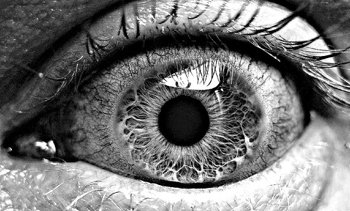
This is why my favorite question in this game is: Would you rather be blind or deaf?
Because the outcome is not only the same in both, it’s the same as it would be if “neither” were an option.
Blind and deaf people don’t necessarily die any younger than someone with all of their senses available to them, they just can’t see or hear. It is completely about the ride. I love it.
The question is imperfect, though, and impossible to answer. No matter how it is asked.
When posed to a group of people who can see and hear just fine, the question is really “would you rather become blind or deaf?”
It is asking which sense you would rather lose, not which you would prefer to never know. Which one you would miss more. It’s impossible for someone who has experienced both senses before to know what it’s like to have never seen or heard.
Regardless, almost everyone says they’d rather be deaf.
Which is certainly understandable. We are a species that has come to depend on our sense of sight. There is a stronger feeling of helplessness associated with being blind. Visuals are valued more than sounds and television always beats radio.
Still, we really don’t know what the ride would be like in either case. Maybe being blind isn’t so bad… If you’ve never been able to see.
The Bat Boy
Lucas Murray is a fairly normal 13 year old boy; growth spurts, cracking voice, et al.
Like most adolescent kids he is fiercely independent and would rather try something on his own and fail than receive any kind of assistance. When he isn’t running around the neighborhood and playing with friends, he enjoys rock climbing and going on hikes.
His favorite hobby, though, is basketball. He loves it and plays all the time. If you ever want to find Lucas, a good place to start looking is on the court at the local park.
There is something fairly unique about Lucas, though…
He is completely blind. And has been since birth.
He has no idea what the world looks like and probably never will. But Lucas doesn’t seem to care… And he doesn’t need to. At least he doesn’t need to see like the rest of us do.
This is because even at his young age, Lucas has mastered the art of echolocation. Yes, that type of echolocation. Like bats and whales.
By clicking his tongue on the roof of his mouth and deciphering the return echoes, this young boy can visualize where objects are in relation to him, how large they are, their density, even what type of material they’re made of.
With the accuracy of naval sonar equipment, Lucas is able to paint a visualization in his mind – a world – which he can see and respond to without ever having to use his eyes. And it meshes well with the world that we live in. The one we see. Lucas can play freely with other children, go off on his own and even hit a jump shot.
This is a fantastic story and one cannot help but pull for Lucas. But it is also very telling of human beings… And our ability to adapt and survive. It shows that despite all of the scientific developments and understandings gained over the years, we still don’t know shit about how we work.
50 years ago Daredevil was a sci-fi superhero, now he is going through puberty.
Lucas’ story also brings about many philosophical questions. Not about his skill or even the blind community, but questions about us.
Like, could the world still function if we were all blind? If Lucas is able to manage his life through echolocation then it’s reasonable to assume that everyone would adapt and master this skill.
What would we find sexy? How would we travel? What would frighten us?
Would there be racism?
The answers to these questions are effectively the same: A world exists with people that can either see or are blind.
The outcomes aren’t any different, it’s the means of getting there.
It’s the ride that’s so fascinating.
The Blind Racist
I wanted to say, “Yes, that’s exactly how it should be.”
But I knew it was wrong.
I wished I could have agreed and that everything was as simple… and thoughtful… as she said it was.
But I couldn’t, and it’s not.
I even hoped she was lying… That she was patronizing me with fake good intentions.
But I knew she was being sincere.
And that’s the worst part.
I’m talking, of course, about a Facebook argument I had a couple of months ago… With the mother of one of my random “friends.”
About the Oscars.
Specifically – and to save face somewhat – it was about Chris Rock’s performance as host and his open commentary about the lack of black representation among nominees. So, at least I wasn’t going on about Leo or Spotlight…
But still, I’m not proud of it.
It was a monster of an argument too. This thing went so far as to nitpicking the Roman Empire’s role in Western culture. And comparing percentages of races in other professions. It got real internet sloppy… links, stats, the whole nine yards.
I think I even typed one of my responses in Word first.
In the exchange, however, my Google jousting counterpart said something interesting. She responded “The blind person sees color. The wise person sees no race.”
This struck me…
Hard.
So much so that I completely abandoned the back-and-forth argument and didn’t look at Facebook for the rest of the day. And I’m still thinking about it two months later.
It wasn’t because I felt she made a good point and “owned me” or anything like that, but because that view of racism actually exists. Moreover, it is (understandably) the most prominent view of racism (sadly)…
That by not even recognizing racial or cultural differences, racism will be eradicated.
It was the coldest shoulder I have ever been given.
And I’m a guy who has gotten his fair share of cold shoulders from women… but they at least knew what I wanted and more importantly knew that they were denying me. This was different.
This was nonacceptance. Prohibition. Repudiation.
That Chris Rock was, in actuality, the racist one for even noticing that there were zero black nominees for the major awards.
But the color we see (or even the race we identify with) is only part of it. Even if every person from this point on were born blind and had to learn echolocation like Lucas Murray, racism would still exist. It is in the “air we breathe.”
Acknowledgement that racial or cultural differences exist is not a prerequisite for being racist. The blind man doesn’t need to see color to perpetuate inequality.
This is because racism is more than just what we see. It’s a structural complex that has been constructed and reinforced by politics and society for hundreds of years. It was built for and on behalf of certain groups of people at the expense of others. Whether those benefiting like it – or even know it – or not.
“Racism is an insidious cultural disease. It is so insidious that it doesn’t care if you are a white person who likes black people; it’s still going to find a way to infect how you deal with people who don’t look like you. Yes, racism looks like hate, but hate is just one manifestation. Privilege is another. Access is another. Ignorance is another. Apathy is another. And so on. It’s not a cold that you can get over. There is no anti-racist certification class. It’s a set of socioeconomic traps and cultural values that are fired up every time we interact with the world. It is a thing you have to keep scooping out of the boat of your life to keep from drowning in it. I know it’s hard work, but it’s the price you pay for owning everything.” – Scott Woods
So getting back to Chris Rock and the Oscars…
The issue isn’t whether he is racist or not because he noticed there weren’t any Black people nominated for a major Oscar. Not even whether or not the nominations were racially biased.
It’s that the movies we think are “good” are deeply rooted in white/European biases.
What shook me wasn’t whether or not someone is racist because they see color. Not even whether or not Lucas Murray could be racist.
It’s that our interpretations of what we see are deeply rooted in white/European biases.
Black and white.
It’s the oldest duality known to humankind.
Nearly every juxtaposition, comparison, or contrast that we have ever come up with stems from this ancient pair of opposites.
Night and day. Cold and hot. Evil and good. Anarchy and order. The list goes on and on.
Black and white symbolize so much for us that we say things are “black as night” and “white hot”.
Evil people have a “black heart” and “white knights” restore civility to our fabled kingdoms in turmoil.
So which would you rather be?
Black or white?
 Monty Carlos