We are proud to present our first Monty Movie! This self titled documentary short, “Monty Carlos” reviews contemporary America through a collection of news footage, film clips, and memes.
finance
My parents pointed out all these dead rabbits on the road when I was a kid. I didn’t know that much about the virus, or even how to spell it.
In 1944, Lt. Hiroo Onada, of the Japanese Imperial Army, was sent to the remote Philippine island of Lubang. His mission was to work with a small team of commando forces to destroy the main airfield and then initiate a series of guerrilla attacks on Allied forces holding the island.
Onada’s team was unsuccessful in destroying the main target and retreated inland. There, they regrouped and began to execute on the second part of their mission. They relentlessly attacked the Allies, but also lost men, supplies, and ground with each engagement. After several rounds, Onada and what was left of his group were forced to retreat deep into the uninhabited recesses of Lubang.
Eventually, the team of commandos lost everyone but the lieutenant. He was completely on his own.
Their names are in our history books: James, Dillinger, Cassidy, Bonnie, Clyde … The bank robbers of lore.
Their stories, triumphs and demises have been sewn into the fabric of our country and we have romanticized them in film and tv for decades. During their runs, most of us even rooted for them to get away. They were our Robin Hoods.
Their portrayal wasn’t always accurate, however.
Some of these celebrated criminals, like Bonnie and Clyde Barrow, were actually brutal and savage killers. Others, like John Dillinger and Butch Cassidy, rarely resorted to violence at all and really were the respected, noble men we believed them to be.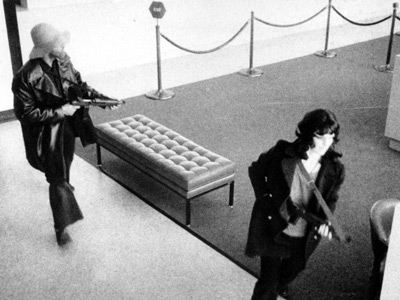
No matter their method or madness, these sack filling bandits baffled police chiefs, filled headlines, and were bigger-than-life celebrities of their time.
But, this phenomenon was short lived. In only a few decades, outlaws went from being household names to afterthoughts on back pages.
I remember it like it was yesterday … The moment I realized that I’ve had it wrong all along.
That sensation of stupidity overcame me; my face was hot with embarrassment.
Where I was. Who I was with. What was going through my mind. Everything about this moment can be recalled. Feeling completely helpless is still the most vivid memory.
It happened a few years ago during a discussion with friends. We were hanging out at my old house in the Upper Kirby area of Houston, TX, and were a few drinks deep. The alcohol started guiding the topics and we were soon talking about life’s bigger questions. One of those slightly-inebriated, deep conversations we have all had.
Somehow, money and banking came up, and my buddy’s quasi-hipster girlfriend (at the time) paused the conversation to ask a question. Little did I know that what she was about to inquire would cause my entire ethos to pivot — almost instantaneously:
“So … Where does money come from?”

It’s a simple question — with a simple answer. And no, not that type of deeper simplicity that is, in itself, complex. Just good old simple.
 Monty Carlos